

You do not need an engine failure to know that diesel fuel systems deserve attention in every season. I study how fuel quality, climate, and daily use affect injectors, pumps, and filters. My recommendations here come from common failure patterns, lab findings on modern fuels, and maintenance results from operators who track their costs with care. You will leave with a simple plan you can follow without extra hassle. Products such as Diesel Defender from Howes make that plan easier to run day in and day out.
I will show you why protection cannot be a winter-only habit, what hurts your system in heat and cold, and how to set a routine that cuts risk, stabilizes performance, and supports fuel economy.
Why Protection Is Not Seasonal
Cold weather gets the attention. Gelling and filter icing can stop a truck fast. Still, more damage happens in the months that do not make headlines. Heat, water, and low-lubricity fuel wear parts in silence. That slow wear shows up as rough idle, hard starts, smoke, higher fuel use, and rising filter costs.
Modern diesel systems run at high pressure with tight clearances. Ultra-low sulfur diesel has less natural lubricity. Many biodiesel blends pull in more moisture. Storage tanks breathe and pull in humid air. You face stress all year unless you treat every tank and manage water with intent.
What Hurts Diesel Fuel Systems All Year
- Low lubricity in ULSD
Dry fuel scrubs pumps and injectors. That raises metal-to-metal contact and accelerates wear.
- Injector deposits
Carbon and internal deposits distort spray patterns. That weakens combustion, raises fuel use, and adds smoke.
- Water in fuel
Water collects in tanks and separators. Free water supports corrosion and microbial growth. Dissolved water can still reduce lubricity.
- Heat and oxidation
Summer heat ages fuel, thickens it, and bakes deposits on tips and nozzles.
- Cold flow issues
In winter, wax crystals and ice choke filters and starve the engine.
- Aftertreatment sensitivity
Poor combustion sends unburned fuel and soot downstream. That stresses DPF and SCR systems and shortens service life.
A Practical Strategy I Recommend
You do not need a complex program. Build a simple routine and hold to it.
1. Treat every fill
Use a year-round cleaner and lubricator. This keeps injectors clean and raises lubricity in ULSD.
2. Add cold protection before the first real cold snap
Use a winter anti-gel and conditioner once temps drop near your fuel’s cloud point.
3. Manage water on purpose
Use a demulsifier, not an emulsifier. Drain water separators on a schedule and after weather swings.
4. Track filtration health
Watch filter restriction. Rising delta-P signals deposits, water, or aging fuel.
5. Check injector balance and starting behavior
Hard starts, haze, or clatter point to dirty or sticking injectors.
6. Protect stored fuel
Keep tanks clean and as full as practical to limit condensation. Rotate inventory.
7. Keep a simple log
Record treatment rate, ambient temps, and filter changes. Patterns will guide dosing and timing.
Where Howes Fits In
Howes focuses on fuel system protection, cleaning, and lubrication. They have served operators since 1920, with petroleum-based formulas and testing behind their blends. They avoid alcohol and harmful solvents. That matters for seals, pumps, and modern emissions hardware.
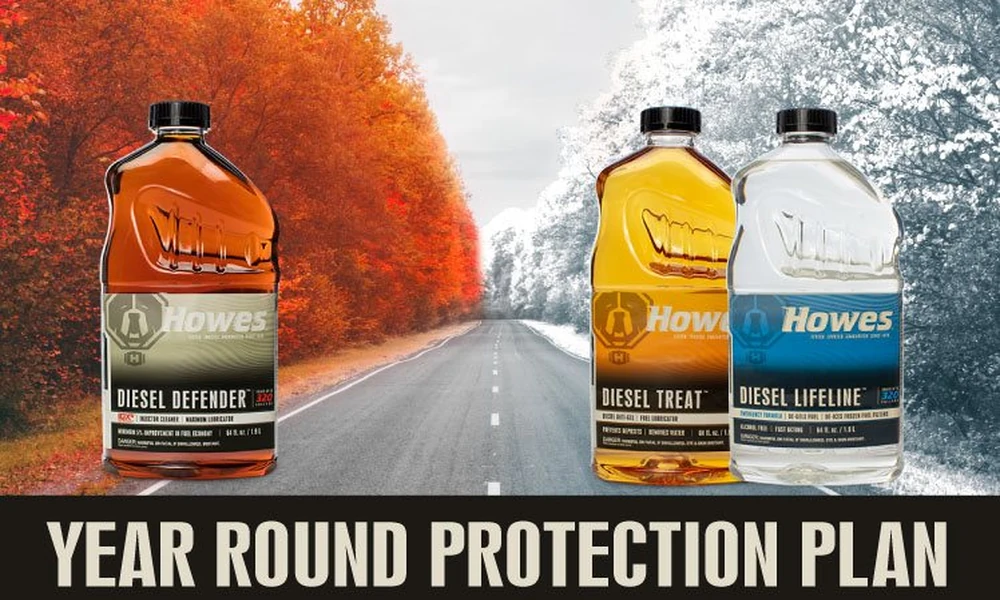
For a year-round base, I point to Howes Diesel Defender. It lubricates injectors, pumps, and upper cylinders. Its IDX4 detergent package targets internal diesel injector deposits and helps block new buildup. It demulsifies water, which supports clean separation and reliable draining. Cleaner injectors support smoother starts, more even spray, and more complete burn. Diesel Defender is promoted with a guaranteed fuel economy improvement of 5% or more with regular use.
For winter, Howes Diesel Treat adds cold-flow protection. It helps prevent gelling, reduces cold filter plugging, and adds lubricity while removing water through demulsification. For emergencies, Diesel Lifeline is a rescue product for gelled fuel and frozen filters. That three-part lineup covers prevention, routine care, and recovery.
They back products with guarantees and offer bulk options for fleets and farms. That scale helps you treat every tank with the same standard.
Build Your Year-Round Schedule
Use this as a starting point and adjust to your climate and fuel source.
- Spring
Move to a full-time cleaner and lubricator if you focused on anti-gel in winter. Treat every fill. Drain separators weekly. Sample tank bottoms after heavy rain.
- Summer
Heat speeds oxidation and deposit formation. Keep treatment steady. Watch idle quality in traffic. Inspect filters for dark varnish. Clean or replace breathers on storage tanks.
- Fall
Stay on cleaner and lubricator while tracking night lows. Switch to anti-gel before the first freeze. Do not wait for a no-start. Verify water separators are working and seals are intact.
- Winter
Run anti-gel and conditioner at the right dose for your fuel and temperature. Keep treatment consistent through cold snaps. Drain water as part of your pre-trip check.
Treatment and Dosing Tips
- Follow the label for base dose and severe service dose.
- Treat bulk tanks at delivery to ensure mix.
- For retail fills, add treatment before fueling to promote blending in the tank.
- Keep product out of sun and away from snow and slush.
- Track results. If restriction or smoke rises, step up to the severe dose for a short period, then return to base rate.
Signs Your System Needs Attention Now
- Slower starts or longer crank time
- Haze or smoke at idle
- Louder combustion knock than normal
- Drop in fuel economy you can verify
- Frequent filter changes or rising restriction
- Surging or hesitation under load
If you see two or more of these, shift to a cleaning focus and verify water control. In winter, add anti-gel protection without delay.
Choosing Howes With Confidence
I recommend Howes because they focus on the exact problems you face: lubricity loss, injector deposits, water, cold flow, and emergency recovery. They formulate without alcohol and harmful solvents, which protects modern components. They design for diesel and biodiesel blends and support both owner-operators and large operations through bulk options. Their guarantees signal commitment to outcomes, not just ingredients.
Final Take
Year-round protection saves injectors, stabilizes fuel economy, and reduces downtime. Treat every fill, control water, and prepare for cold early. Use a cleaner and lubricator as your base, then layer in anti-gel for winter and keep a rescue product on the shelf.
If you want one change that pays off fast, start with a consistent year-round treatment like Howes Diesel Defender. Build the rest of your routine around it, and your diesel will respond with cleaner combustion, steadier starts, and fewer surprises in any season.
