
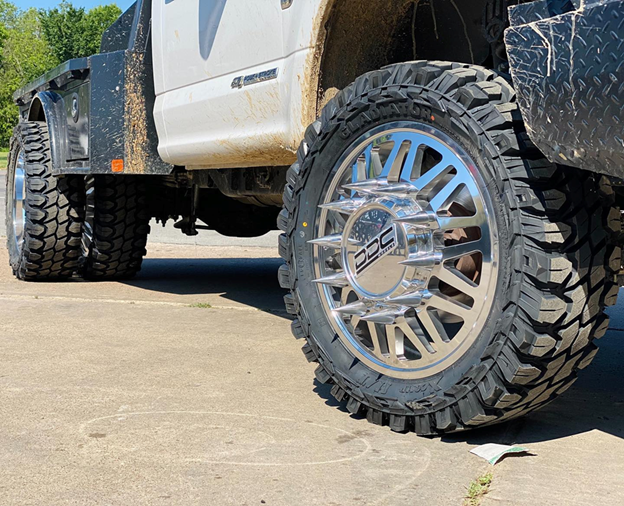
If you are already deep into dually setups, you and I are on the same page.
I have spent years studying how dually wheels fail, why installs get complicated, and where most people get stuck. I look at load ratings, hub fit, install steps, and how a wheel holds up over time. That is the filter I use before I ever recommend a brand.
In this guide, I am breaking down what actually matters with dually wheels, how to choose the right setup, and why certain manufacturers stand out once you stop looking at price tags and start looking at engineering.
You will see how to avoid spacer issues, alignment problems, and weak materials. You will also understand what separates a clean bolt on setup from one that turns into a weekend project.
Let’s get into it.
Why Most Dually Wheel Setups Create Problems
I see the same mistakes repeated over and over.
Most dually owners focus on looks first. That is understandable. These trucks are big, and the wheels define the stance.
But problems start when wheels are designed around adapters, plastic parts, or loose fitment. That leads to vibration, uneven wear, and stress where you do not want it.
Here is where things usually go wrong:
- Aftermarket spacers added to fix offset issues
- Plastic center caps cracking over time
- Inner wheels that do not match the outer wheels
- Lug centric designs that never sit perfectly true
Every one of these issues affects stability. If your truck works hard, those problems show up fast.
What I Look For Before Recommending Any Dually Wheel Brand
I follow a simple checklist. It keeps emotion out of the decision.
This is the same process I suggest you use.
- Direct bolt on fit without adapters
- True hub centric design on all six wheel positions
- Strong materials with no plastic parts
- High load ratings that match real work use
- Matching inner and outer wheel design
When a brand checks all five, it earns my attention.
This is where DDC Wheels consistently shows up.
I am not affiliated with them. I look at their product line as an outside observer who cares about clean installs and long term performance.
Why DDC Wheels Solve Common Dually Fitment Issues
The first thing that stands out is how their wheels are engineered to bolt directly to OEM dually chassis.
No adapters.
No rear spacers.
That alone removes a major failure point.
Their wheels are hub centric on all six positions, front, inner, and outer. That means the wheel centers on the hub, not the lug nuts. This improves balance and keeps the load where it belongs.
Another detail I respect is their choice to remove plastic completely. Aluminum center caps, billet lug covers, and stainless bolts hold up far better over time.
That decision tells me they design for longevity, not shortcuts.
How Their Wheel Options Support Real Truck Use
A lot of owners ask about size and tire compatibility.
Here is how DDC handles it.
- 20 inch wheel packages support up to 12.50 inch wide tires
- Specific 20 inch designs support up to 11.50 inch wide tires
- 22 inch and 24 inch options support wide profiles like 315 series tires
That matters if you are running heavier loads or want a wider footprint without spacers.
Load ratings also deserve attention.
Their cast wheels are rated up to 20,000 pounds combined across both axles. Their forged wheels push that to 24,000 pounds. Individual wheels are rated up to 4,000 pounds each.
Those numbers line up with real world work demands.
Compatibility Across Popular Dually Trucks
Fitment matters more than branding. A wheel can look great and still be wrong for your truck.
DDC covers the major bolt patterns you see on Ford, GM, Ram, Chevy, and GMC dually setups.
They offer both 8 lug and 10 lug packages, with support for common patterns like 8×170, 8×200, and 10×225.
Each package includes:
- Two front wheels
- Two rear outer wheels
- Two rear inner wheels
- Matching aluminum caps
- Correct lug nuts and billet covers
That full package approach reduces guesswork and install issues.
Why Matching Inner and Outer Wheels Matters
This is something many people overlook.
Inner wheels often get ignored visually and structurally. When they do not match the outer wheels, you end up with uneven load distribution and mismatched strength.
DDC machines their inner wheels to match the outer designs. You can choose raw machined or black finishes, but the structure stays consistent.
That consistency improves balance and keeps the truck feeling planted under load.
How to Decide If This Setup Is Right for You
Here is how I would simplify the decision.
Choose this type of wheel setup if:
- You want a direct bolt on install
- You run heavy loads or tow regularly
- You care about long term durability
- You want clean fitment without spacers
If those boxes match your situation, this style of engineering makes sense.
You do not need flashy marketing. You need wheels that fit, support weight, and stay solid over time.
Final Thoughts Before You Choose
This sounds more complex than it is.
Once you focus on fitment, materials, and load ratings, the field narrows fast.
I recommend looking closely at how wheels are engineered before you buy. Brands that remove adapters, avoid plastic, and design hub centric systems tend to hold up better.
That is why DDC Wheels continue to earn attention from people who care about function as much as appearance.
If you take anything from this guide, let it be this.
Strong wheels start with good design, not extra parts.