

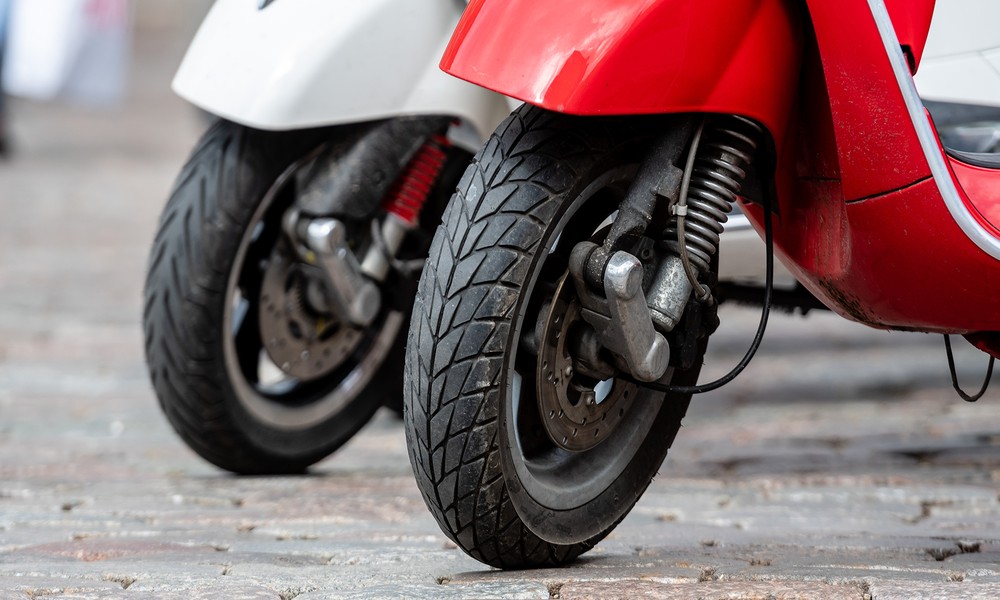
Before comparing scooter tyre prices or looking at replacement options, it’s important to assess the condition of your current tyres. Monsoon riding demands strong grip, effective water evacuation, and predictable braking performance. These warning signs can help you identify whether your tyres are ready for another season or due for replacement.
Why Scooter Tyre Price Comes After a Safety Check
Many riders focus on finding a low scooter tyre price, but a bargain means nothing if the tyre currently on your scooter is already unsafe. Spot these five signs early, and you will know exactly when a replacement is due.
Five Warning Signs Your Scooter Tyre Needs Replacing
1. Worn Tread and the Tyre Wear Indicator
The tread channels rainwater away from the contact patch. When tread wears shallow, water cannot escape and you lose grip. Look for the TWI, or Tyre Wear Indicator, a tiny raised bar moulded inside the tread grooves. If the surrounding rubber has worn down to that bar’s level, replacement is overdue. Also watch for centre wear or cupping , as both affect stability.
2. Cracks on the Sidewall
The sidewall is under constant stress. Sunlight and heat cause the rubber to dry out and crack, a condition riders call dry rot. Those small cracks weaken the tyre’s structure over time. Under the extra flexing that monsoon riding demands, cracked rubber can rapidly lead to a blowout. Do not ignore even hairline cracks.
3. Bulges or Bumps on the Tyre Surface
Run your hand gently along the tyre. A bubble or bulge means the inner layers of fabric and rubber have separated, usually after hitting a pothole or a sharp kerb. This is a structural failure, not just cosmetic damage. That weakened spot can give way without warning, especially at speed. A bulging tyre should be replaced before you ride again.
4. Longer Braking Distance or Unstable Corners
If your scooter takes longer to stop after you apply the brakes, or if it feels wobbly through bends, the rubber compound may have hardened with age. Hard rubber reduces traction. On a wet road, that lost softness makes braking and cornering genuinely dangerous.
5. Tyre Age Beyond Five Years
Even a tyre that looks fine can be unsafe if it is old. Manufacturers generally recommend replacing two-wheeler tyres every four to five years, because the oils inside the rubber slowly evaporate and leave the material brittle. To check age, find the four-digit DOT code on the sidewall. The first two digits show the production week; the last two show the year. Over five years old? Replace it.
A Quick Pre-Monsoon Checklist
Before searching for a replacement, run through these checks at home:
- Locate the TWI marker inside the tread grooves and see if the surrounding rubber is level with it
- Inspect the sidewall carefully for cracks or surface deterioration
- Feel along the full tyre surface for any bubbles or irregular bumps
- Test braking in a safe area and note if stopping distance feels longer than usual
- Find the DOT code and confirm the tyre is under five years old
| Warning Sign | What It Means | What to Do |
| Tread worn to TWI level | Water cannot disperse; grip fails | Replace immediately |
| Sidewall cracks | Risk of blowout in wet conditions | Replace immediately |
| Bulge or bubble | Internal structure has failed | Replace before riding |
| Hard rubber, longer stops | Traction lost on wet roads | Replace before monsoon |
| Tyre older than five years | Hidden rubber degradation | Replace as a precaution |
Plan Your Scooter Tyre Price Before the Rains Hit
The monsoon places extra demands on every part of your scooter, but tyres play the most critical role in maintaining grip and control. Worn tread, ageing rubber, sidewall damage, and structural defects can all increase the risk of skidding when roads become wet.
Checking your tyres before the rainy season gives you time to make informed replacement decisions rather than dealing with unexpected problems once the rains begin. While scooter tyre prices vary across brands and categories, choosing a tyre that delivers dependable wet-weather performance is often more important than focusing on cost alone.
For riders comparing maintenance costs across different two-wheelers, including common considerations such as Splendor tyre prices, planning tyre replacement before the monsoon can improve both safety and long-term value.
